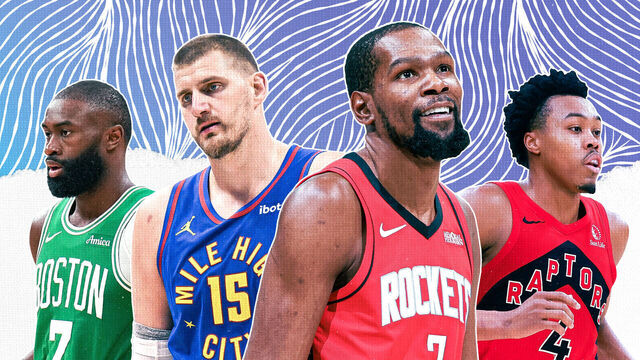
As the second round of the NBA playoffs tips off, eight first-round losers are left licking their wounds and trying to figure out how to take the next step. Here's a brief look at what's next for each team.
Teams are listed in order of their regular-season finish.
Boston Celtics
If someone had told you in October that the Celtics would lose a seven-game first-round series, most people would have considered that a pleasantly surprising campaign for the Jayson Tatum-less squad. That it feels so disappointing instead is a testament to the work of Jaylen Brown, head coach Joe Mazzulla, and the rest of the Celtics. Boston won 56 games before blowing a 3-1 series lead to the 76ers (with Tatum sidelined for Game 7).
While the Celtics exceeded expectations on the court, Boston managed to execute tax-saving measures off of it, creating much more roster flexibility than anyone projected a year ago. The team's shrewd maneuvers over the last 10 months allowed it to regain access to various roster-building mechanisms and save approximately $325 million while maintaining a core of Tatum, Brown, Derrick White, and Payton Pritchard (plus Neemias Queta, Sam Houser, and standout rookie rookie Hugo Gonzalez).
The Celtics have options. They can add a solid rotation player using the non-taxpayer mid-level exception and hope that a fully recovered Tatum fuels a surge back to the top of the East. Or they can dangle Brown and picks to try to elbow their way into talks for an even bigger star like Giannis Antetokounmpo. Either way, expect Boston to be back at full throttle next season.
Denver Nuggets
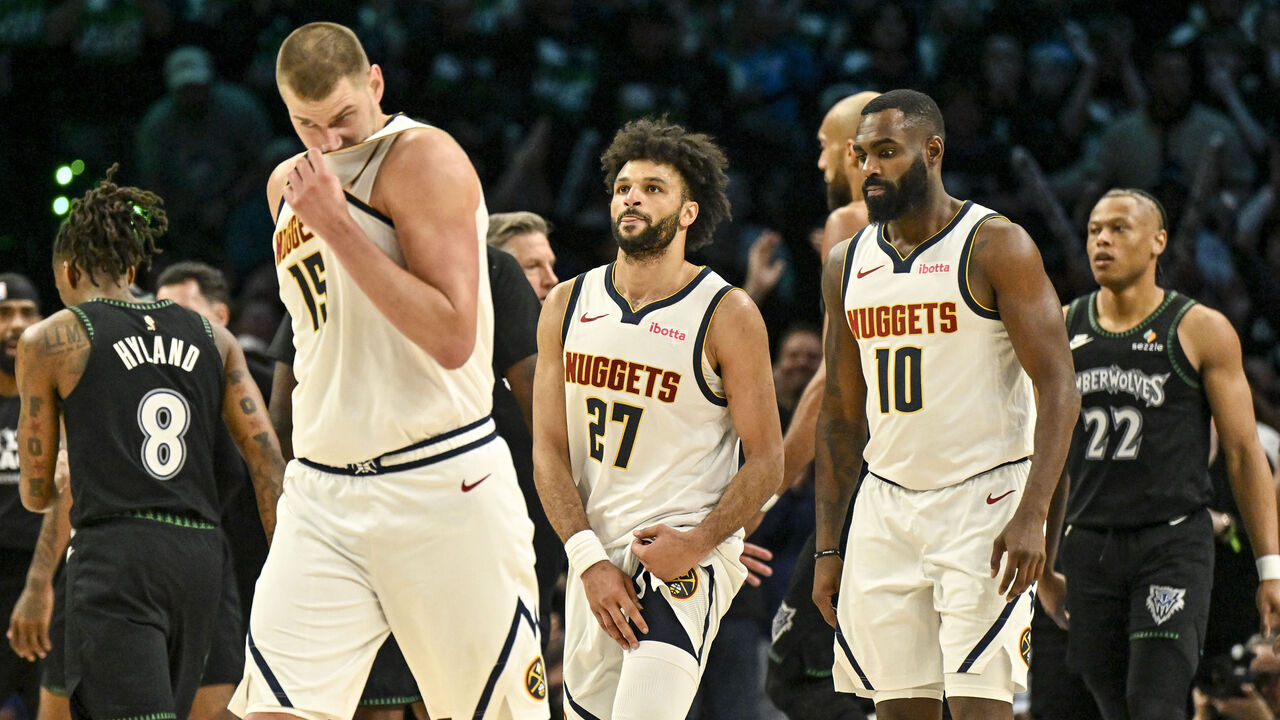
The postseason's most disappointing team, Denver followed up a season-ending 12-game win streak by getting embarrassed at the hands of a comically depleted Timberwolves squad. The humiliating six-game defeat - in which Nikola Jokic looked strangely mortal and Jamal Murray couldn't rise to the occasion - may spell the end of the Nuggets as we know them.
Denver is a projected second-apron team, but history suggests team ownership (the Kroenke family) won't stomach such a bill, especially after a first-round exit. At least one of unrestricted free agent Cam Johnson (acquired in the Michael Porter Jr. trade) or rising youngster Peyton Watson (RFA) will likely be a casualty of cost-cutting measures. Don't be shocked if there are bigger moves, with Jokic the Nuggets' only untouchable asset.
Head coach David Adelman had a disastrous postseason, but early reports suggest he'll get another crack at it next year.
Houston Rockets
A preseason knee injury to starting point guard Fred VanVleet left Kevin Durant's Rockets without a table-setter, and a postseason injury to Durant left Houston's offense virtually helpless. But using injuries as an excuse to run it back next season would be a mistake.
The Rockets don't need a complete reset, but between Durant's bad vibes and the young core's obvious limitations, Houston needs a retool at the very least. Whether that means finding a taker for Durant, replacing him with another established star, or trading one of Alperen Sengun or Amen Thompson to maximize what's left of Durant's window, the Rockets need to change directions. It's time to cleanse themselves of a toxic situation.
Atlanta Hawks
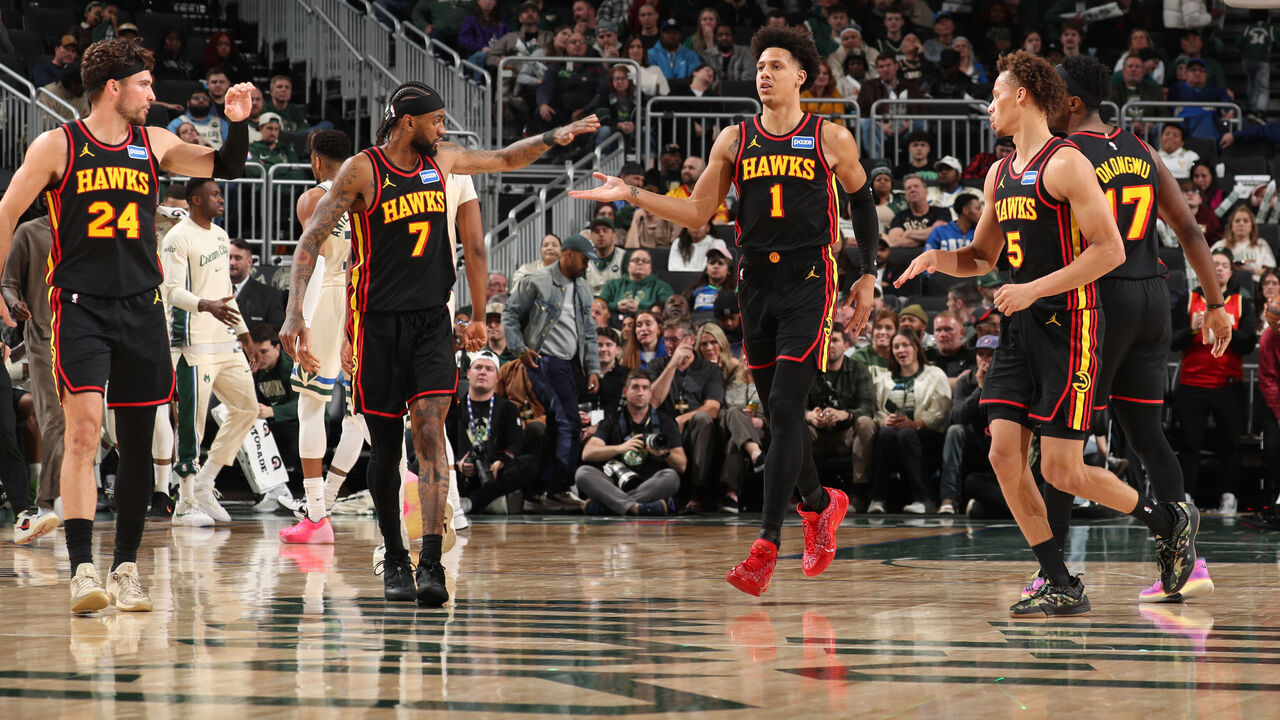
The Hawks probably feel the most hopeful of any first-round loser, which is saying something considering they got trounced by 51 points in their last game. Atlanta built one of the league's youngest winning teams while ditching Trae Young and acquiring an extremely valuable 2026 lottery pick (the best pick between New Orleans' and Milwaukee's selections). The Hawks also have All-Star Jalen Johnson, Most Improved Player Nickeil Alexander-Walker, Dyson Daniels, Onyeka Okongwu, Corey Kispert, and Zaccharie Risacher under contract for at least the next two years without anyone making 20% of the salary cap in any season.
Despite some of Johnson's defensive and creation issues, Daniels' shooting woes, and Risacher's general ineffectiveness as a former No. 1 pick, many teams would kill to have the core and team-building advantages Atlanta has created for itself. If lottery luck hands the Hawks a franchise-changing talent - or even just another impact player - this could be the East's most promising squad.
And don't discount the Hawks in any superstar trade discussions.
Toronto Raptors
A surprising seven-game playoff run can be very instructive for the Raptors. The team collected ample evidence that franchise star Scottie Barnes can be a contending-level leader, rookie big man Collin Murray-Boyles is a ready-made winner, RJ Barrett's positive attributes can still be maximized, and youngsters like Jamal Shead and Ja'Kobe Walter deserve a place in what could be a bright future.
However, Toronto's first-round loss to Cleveland also spotlighted some glaring roster flaws, like a lack of shooting and off-the-dribble creation. Immanuel Quickley (injured), Brandon Ingram (ineffective and injured), and Jakob Poeltl watched from the sidelines during the Raptors' most inspiring moments this spring, which says as much about the difficulties ahead as who was in the trenches.
Quickley has been a solid two-way guard when healthy, and he can address some of those shooting and creation issues, but for a lead guard, he has playmaking limitations. He also still has three years remaining on a contract that is mediocre at best. Ingram's shotmaking ability helped improve the team's half-court offense, but his overall impact has never matched his offensive talents, he was awful in the playoffs, and he's still owed up to $82 million over the next two years. Poeltl's attached to the worst contract of the bunch (through 2030) and looked like a shell of himself while recovering from a back issue.
The Raptors need to surround Barnes and a promising young core with more shooting and better-fitting offensive help. However, they've committed nearly $100 million per year to a veteran trio that didn't help them this spring. Can Toronto move some of its dead weight?
Orlando Magic
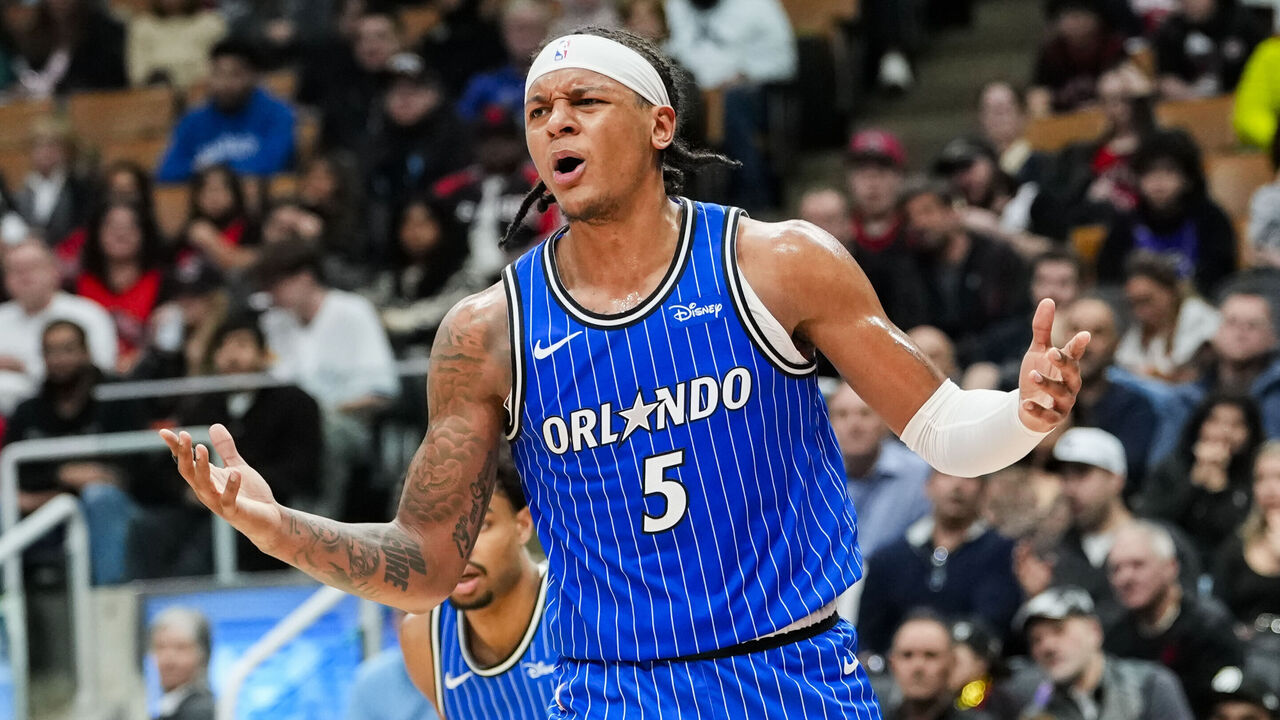
The Magic were arguably the league's most disappointing team all season and then blew a 3-1 series lead to the top-seeded Pistons, during which time Orlando played some of the worst offensive basketball in recent memory. That's not what the front office had in mind when it moved a ton of draft capital to acquire Desmond Bane.
The Magic can chalk some of it up to injuries, but at a certain point, they have to confront the fact that the fit between Paolo Banchero and Franz Wagner is sketchy at best. Meanwhile, the team has over-leveraged itself trying to maximize that duo. Orlando owes the quartet of Banchero, Wagner, Bane, and Jalen Suggs an average of $162.3 million (or roughly 94% of the salary cap) over the next three years and can't trade a first-round draft pick until 2032. That's acceptable when you're contending for championships, but not when you're a play-in team.
There aren't many remaining routes to supplement this core or juice the team's sticky offense. Head coach Jamahl Mosley took the fall Monday, but Orlando's true path forward likely begins with a Banchero or Wagner trade.
Phoenix Suns
Although the Suns were an inspiring, overachieving bunch, it's tough to imagine how one of the league's most pleasant surprises can build on this season.
Retaining free agents Collin Gillespie (unrestricted) and Mark Williams (restricted) would be a good start, and Dillon Brooks is extension-eligible after helping change the team's culture, but such deals would only maintain a respectable floor for Phoenix. Raising the team's ceiling any time soon is a much more difficult task. The disastrous Kevin Durant and Bradley Beal era left the club without control of its own draft pick until 2032, and there are no blue-chip prospects around to grease the wheels of a superstar trade in support of Devin Booker. The team's cap sheet isn't great either, and that's without accounting for a potential Brooks extension.
Booker's deal won't age well - he could earn $68.8 million four years from now - but without picks for a rebuild, what other options does Phoenix have? The Suns must try to stay half-decent until another opportunity to contend presents itself, even if that's years away.
Portland Trail Blazers
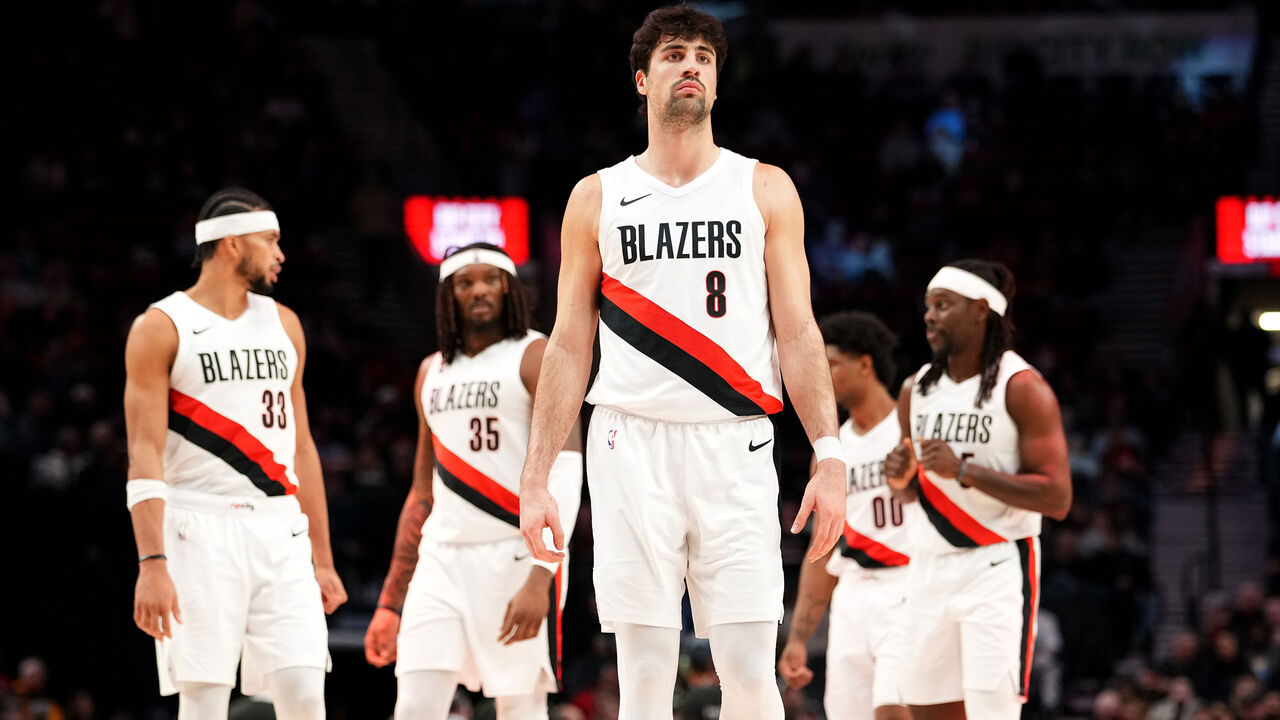
There's a world in which the Blazers get stuck in the middle, but there's also a real possibility Portland could emerge as a contender.
Deni Avdija is an All-Star set to earn just 8% and 6.9% of the cap over the next two years. Donovan Clingan has the makings of a franchise center. Rising star Shaedon Sharpe and all-world defender Toumani Camara have already been secured on team-friendly deals. Scoot Henderson showed some flashes in the playoffs. Jrue Holiday and Jerami Grant are great vets on big contracts who boosted their trade value this year. And Damian Lillard will return to the court next season.
There are a lot of moving parts, but the Blazers have enough to compete for another West playoff berth next season as is, and Portland has the goods to take a big swing if it wants to. This is sneakily one of the most fascinating teams of the offseason.
Joseph Casciaro is theScore's lead NBA reporter.