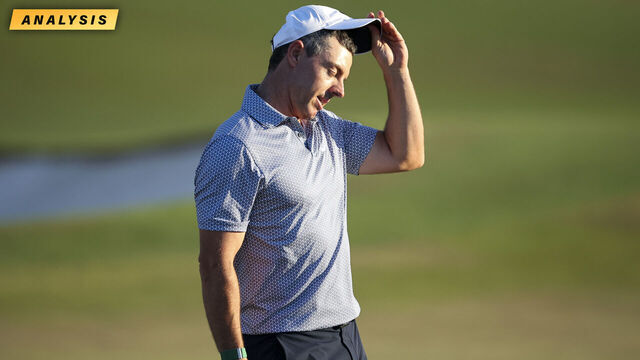
Some people go skydiving or bungee jumping for an adrenaline rush. While those can do the trick, we suggest simply watching Rory McIlroy try to hang on to a lead at the Masters.
One year after taking the golfing world on perhaps the wildest Sunday roller coaster in the sport's history, McIlroy provided an encore Saturday, losing a six-shot lead to sit tied with Cameron Young heading to the final 18 holes at Augusta National.
Any longtime golf fan will tell you McIlroy is far from a sure thing at the iconic course, but losing a six-shot advantage in just a few hours' time is still stunning.
Here's how it happened.
Driver woes bled into approach
McIlroy built his enormous lead despite posting one of the most jarring stats in recent memory. The 36-year-old has long been revered as the best driver in golf, but he entered Saturday ranked 90th out of 91 players in the field in fairways hit this week. Although his tee shots were going all over the yard, McIlroy time and again managed to stay out of trouble in the pine straw and rough around Augusta National. Well, the luck of the Irish ran out Saturday, and the disease of the wayward driver spread to his approach game.
McIlroy actually hit eight fairways with the big stick, but his irons looked nothing like they did in the opening two rounds. He finished Saturday's round sitting 53rd of the 54 players who made the cut in strokes gained: approach, seemingly tugging every iron shot to the left. He'd been top 10 in that statistic over the first two rounds of play.
Terrible decision at 11
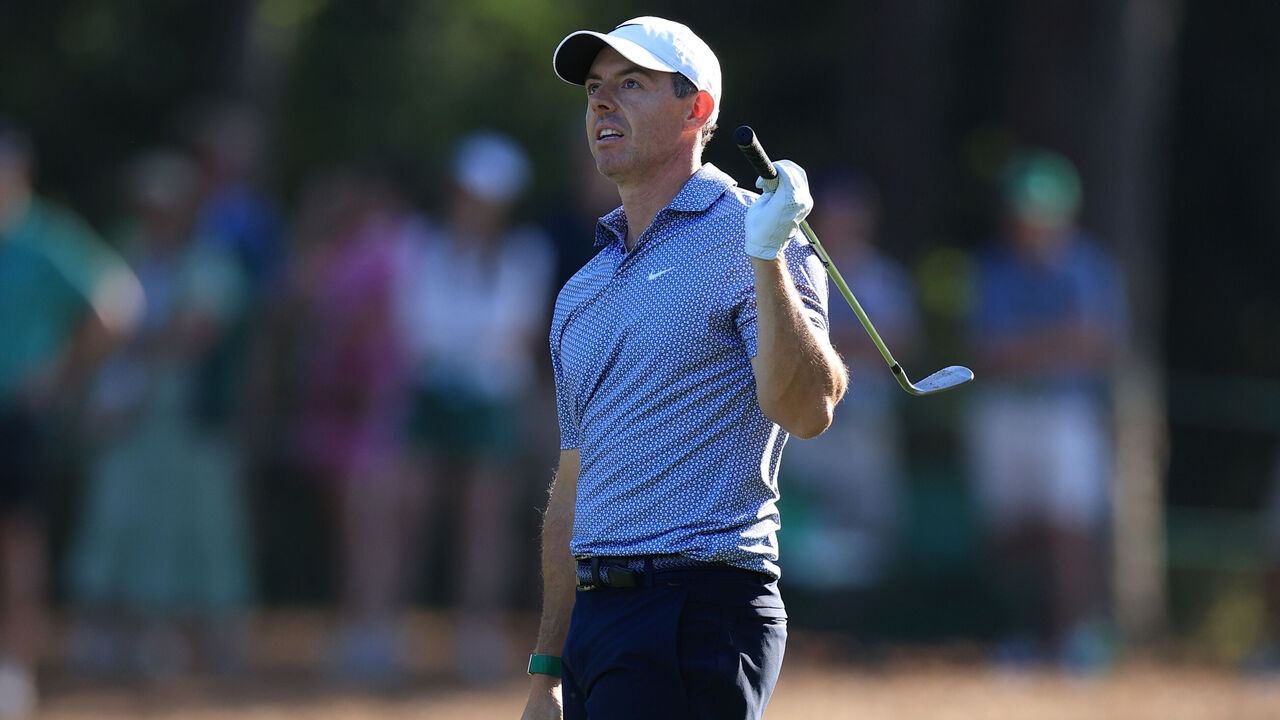
Earlier in the week, McIlroy revealed that Jack Nicklaus gave him some simple advice for repeating as champion.
"'No f-ing double-bogeys,'" McIlroy recounted to CBS Sports' Amanda Balionis with a laugh.
McIlroy overcame four double-bogeys last year - including two in the final round - to claim his first green jacket. He followed that advice to perfection through 46 holes of action this week before disaster struck on the lengthy par-4 11th.
After his tee shot hit a tree, McIlroy was left with 222 yards to the green for his approach. He opted to try to sling a draw into the pin - a risky decision with water looming just to the left. He overhooked the shot and it found a watery grave, provoking gasps from the patrons at Amen Corner. He then hit a brilliant pitch from the drop zone but failed to make the bogey putt and carded his first double-bogey of the week.
Rory's approach is wet on No. 11 😲
— Sports on Prime (@SportsonPrime) April 11, 2026
Inside Amen Corner is LIVE, only on @PrimeVideo. pic.twitter.com/oVjlcYnkxe
A double-bogey is painful on its own, but the timing of McIlroy's worst decision of the week added to the misery. Cameron Young birdied No. 16 roughly five minutes after McIlroy's mess to grab the solo lead.
Houdini act wears off
McIlroy's otherworldly long game gets the headlines, but he's quietly become a wizard around the greens, and that was on full display in the opening two rounds. The five-time major champion pulled off Houdini acts from outrageous positions. He led the field both days in strokes gained: around the green, highlighted by his remarkable pitch for birdie Friday at the 17th.
While the golfing world revelled in McIlroy's short-game show, it was also tempting to wonder whether it was sustainable. Not quite, as it turns out. He still hit a number of incredible pitch shots around Augusta on Saturday but failed on numerous occasions to pay them off with a clutch putt. He finished the day 40th in strokes gained: putting - not nearly good enough when his approach game was already below standard.
Young got hot - and lucky
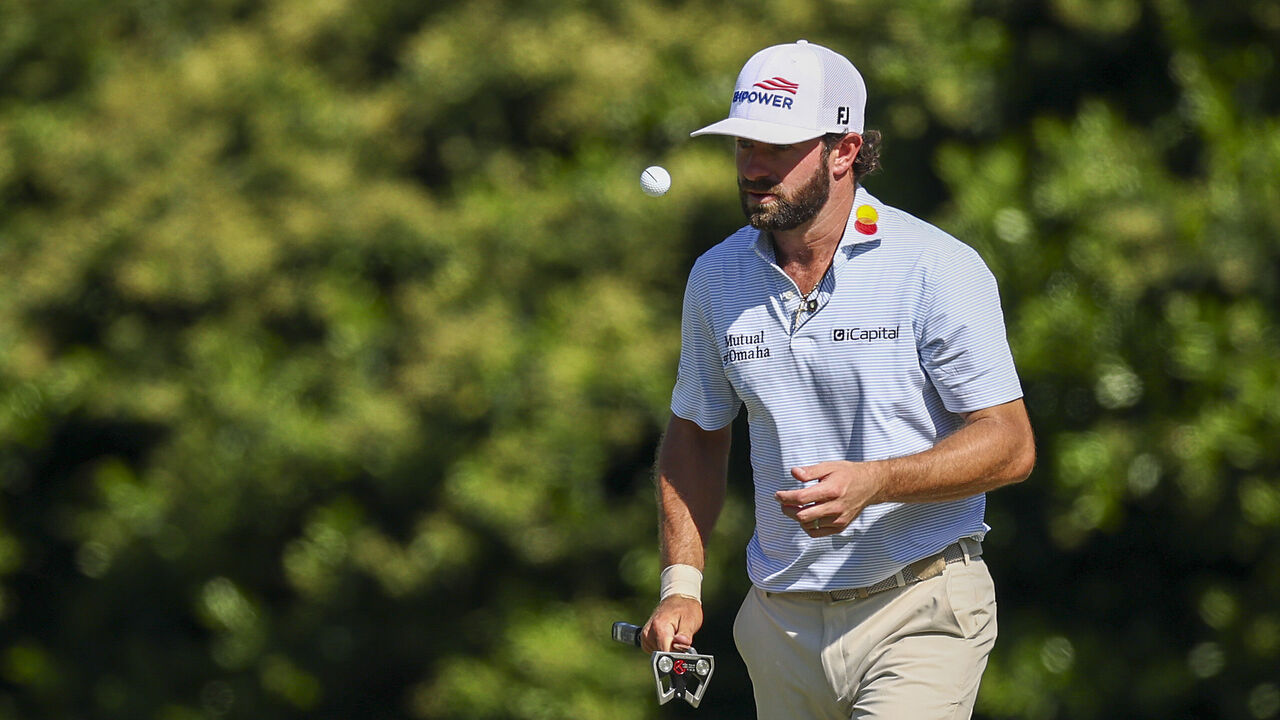
Any memorable collapse usually also requires somebody to make a heroic, red-hot charge, and Young was more than willing to play that role Saturday. The Players champ had played with McIlroy the opening two rounds, giving him a front-row seat to the record-setting 36-hole lead. Clearly Young was a quick study, because he brought a very scorable Augusta to its knees.
Young scattered eight birdies against just one bogey on the day, riding a hot putter and moving from eight shots back to level. He also frequently provided proof of the old adage, "You have to be good to be lucky." The best example of Young's good fortune came on No. 13 when he hooked his drive well into the trees and penalty area, only to have to it strike a tree and drop right into the fairway. Given a second chance, Young took full advantage with a birdie on the par-5, the second of four he posted on the closing nine.