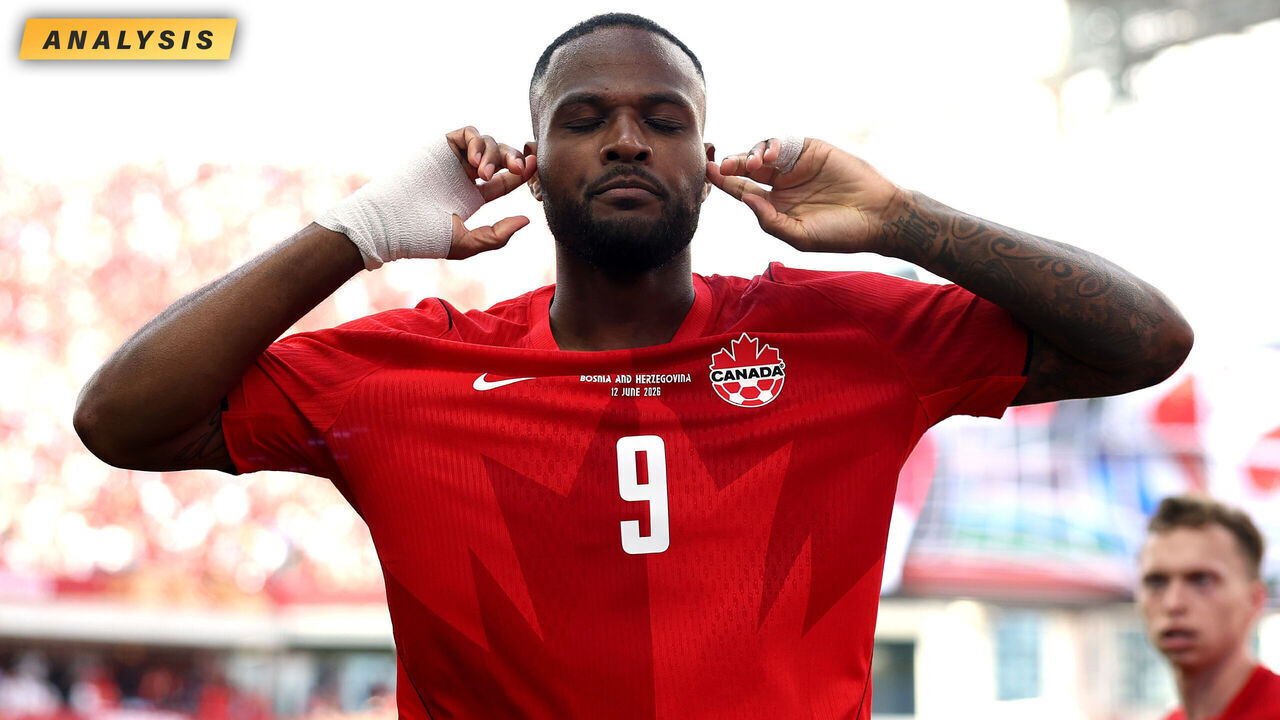
Canada is finally off the mark on the biggest stage of all.
The men's program recorded six consecutive defeats through its World Cup campaigns in 1986 and 2022. Now, it has its first point after Jesse Marsch's side battled back to draw 1-1 with Bosnia and Herzegovina in its opening game Friday on home soil.
In truth, Canada was unlucky not to become just the third CONCACAF nation, and the first since 1990, to beat a European opponent at the World Cup after trailing at halftime.
Here are three observations from the Canadians' heartening display in Toronto.
Canada gets dominated in the air
Specialized set-piece coaches have grown in popularity in recent years. Nicolas Gagnon, who prepares Canada for dead-ball situations, should be more frustrated than most with the first half.
Nine corner kicks came and went for Canada with little incident. Stephen Eustaquio's deliveries were underwhelming, lacking the whip and direction to really trouble Bosnia, and often headed away with minimal fuss. And the short corner routines weren't stretching and distorting the visiting team's defense in the slightest.
Bosnia seemed happy to concede corner kicks all afternoon. Sergej Barbarez's team was well-coached and disciplined for these scenarios.
It was even worse for Canada from a defensive perspective. Bosnia had one thing on its mind after winning free-kicks: Smack it toward the crowd of white shirts near the penalty spot. The Balkan nation backed itself to leap higher and battle harder than Canada, and it won the first header from three straight free-kicks before opening the scoring.
Accusatory fingers can be pointed at a few Canada players for Bosnia's goal. Why did Sead Kolasinac have enough space between two Canadians to flick Ivan Basic's corner toward the middle of the six-yard box? Did goalkeeper Maxime Crepeau - who had some twitchy moments early in the contest - overcommit as he moved toward the near post? Was Richie Laryea too focused on grappling rather than trying to beat goalscorer Jovo Lukic to a header?
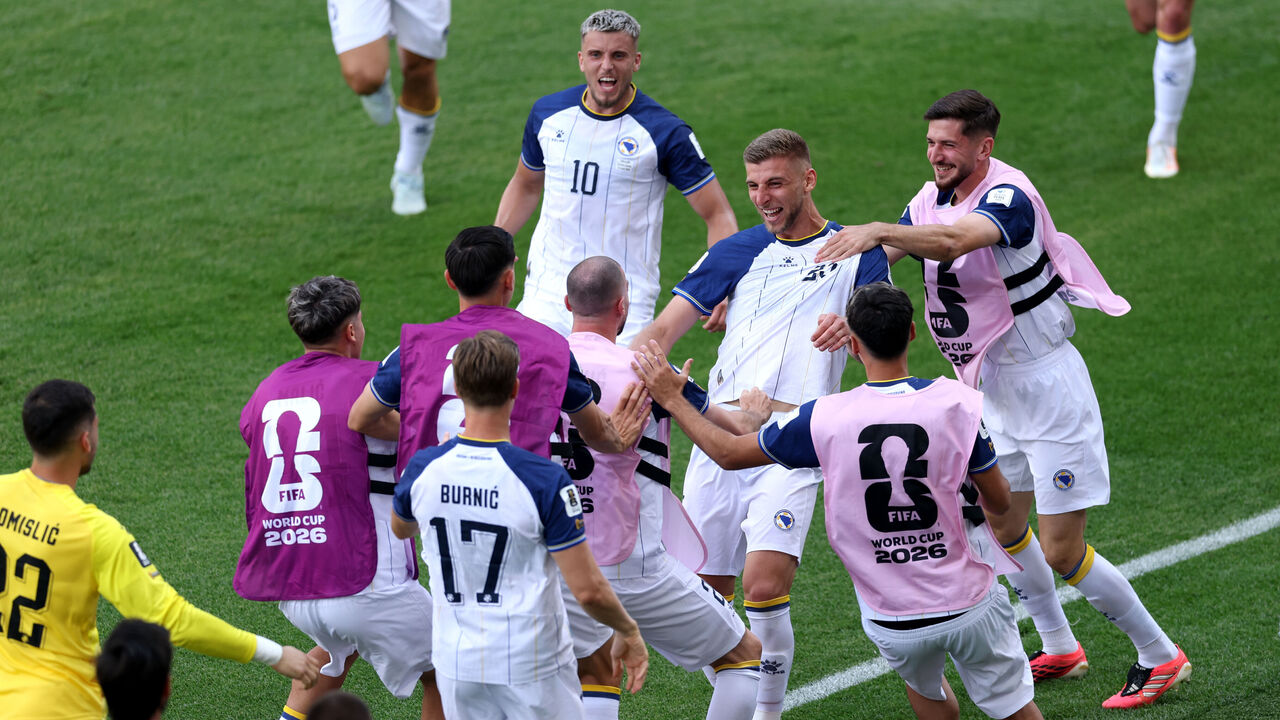
Truthfully, though, it was a well-executed corner kick - especially Kolasinac's flick-on - by a team that simply trumped Canada in terms of physicality and organization on set-pieces.
There were 12 aerial duels across both boxes during the opening period. Bosnia won every one. Across the whole pitch, Bosnia won 70% of these battles before the interval.
Canada needed to accept defeat in that department and play the ball on the ground.
Substitutions make the difference
Canada was less tentative after the break and came close to getting its first goal of the tournament in the 53rd minute.
Ismael Kone slid a first-time ball inside to Eustaquio on the edge of the box, and he instantly pushed the ball forward to Laryea. Those one-touch plays were almost entirely absent in the first half. Laryea's subsequent shot was destined for the far corner, but Kolasinac tracked back and put his foot on the ball, which rebounded off his own crossbar before a teammate cleared it away.
Canada was unfortunate but encouraged.
Although Marsch's substitutions have been criticized during his time at the helm, he was proactive with his changes shortly after an hour had elapsed. It was no time for reputations. He needed individuals to step up and keep his team in the ascendency. Jonathan David and Tajon Buchanan, two nailed-on starters throughout his tenure, were withdrawn, along with Liam Millar. Ali Ahmed, Promise David, and Jacob Shaffelburg entered the fray.
Jonathan David was abject, scuffing a shot straight at the goalkeeper in the 16th minute and doing little else thereafter. Buchanan and Millar toiled to little effect. There was more urgency, more focus, and more willingness to pour bodies forward after the switches. Ahmed was skipping challenges and prodding the ball into dangerous areas, Shaffelburg wasn't as ponderous as the substituted wingers and struck his crosses early, and Promise David took gambles with his runs, plus his touches were fluid rather than labored like those from Jonathan David.
And when the hydration break came at the wrong time for Canada and seemed to douse the extra fire in his team, Marsch turned toward his bench again. Cyle Larin replaced Tani Oluwaseyi.
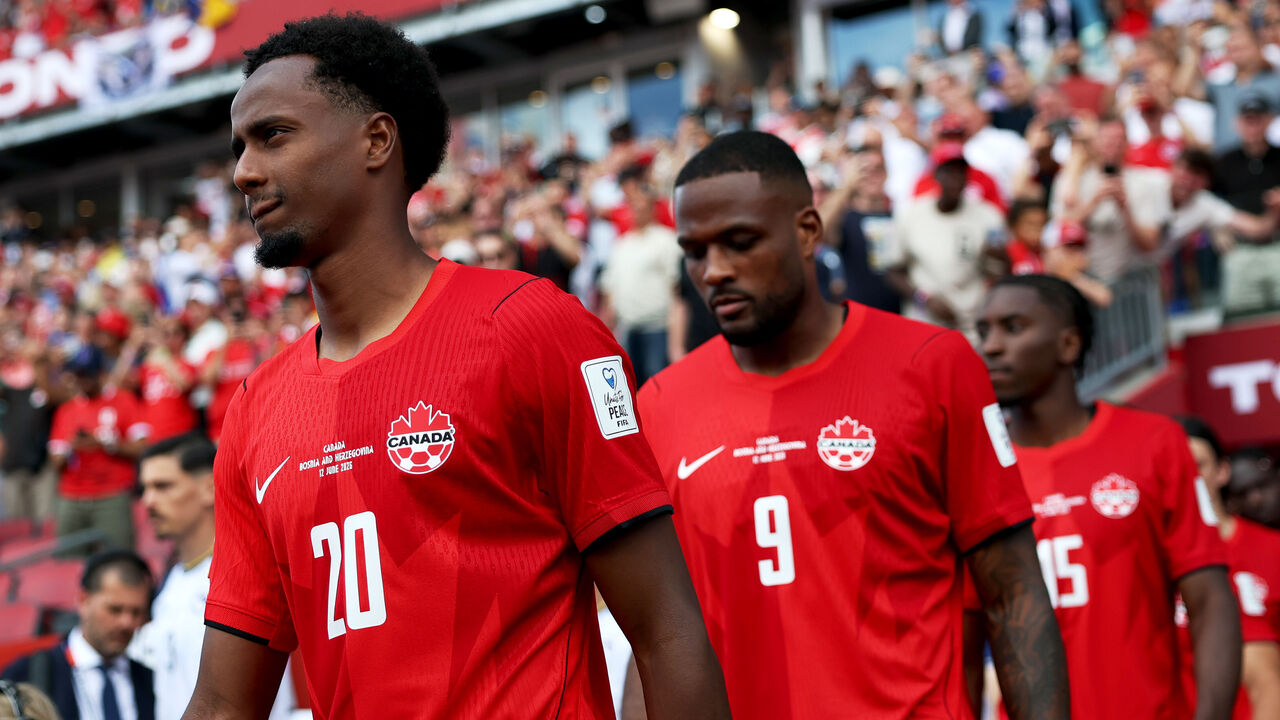
Larin was rejuvenated when he moved to Southampton in the winter transfer window, scoring nine goals despite starting only 11 matches. But Canada was yet to benefit from Larin's renewed confidence, as his barren run stretched to no goals in 14 caps before the Bosnia bout. His omission from the starting lineup was a surprise but also justified.
It will be much harder to leave him out of the XI now. Kone, who was involved in all of Canada's good work, carried the ball beside his marker before stroking the ball toward Promise David, who then sent it to Larin with a delicious outside-of-the-boot pass. Larin's goal did benefit from a generous deflection, but he evaded Tarik Muharemovic with a sublime turn before slapping the ball toward Bosnia's mesh.
It was precisely the snappy, clinical play that has earned Larin the nickname "the Brampton Bagsman" among Southampton fans, and it was worth the wait from a Canadian perspective.
Reasons for optimism
It's easy to bemoan a missed opportunity after Canada failed to glean three points from its opener. Larin was close to winning it in the 96th minute, only for Muharemovic to stretch out a foot for a heroic block.
Regardless, Canada is in good shape. Eight of the 12 third-place teams in the group stage will progress to the round of 32. Three points and a goal difference that doesn't err too far into the negative are expected to be enough to reach the knockout rounds.
Canada already has one point, and a meeting with Qatar, the weakest team in Group B, is up next in Vancouver. Canada will conclude its matches at this stage against Switzerland, which will also be held in Vancouver, on June 24.
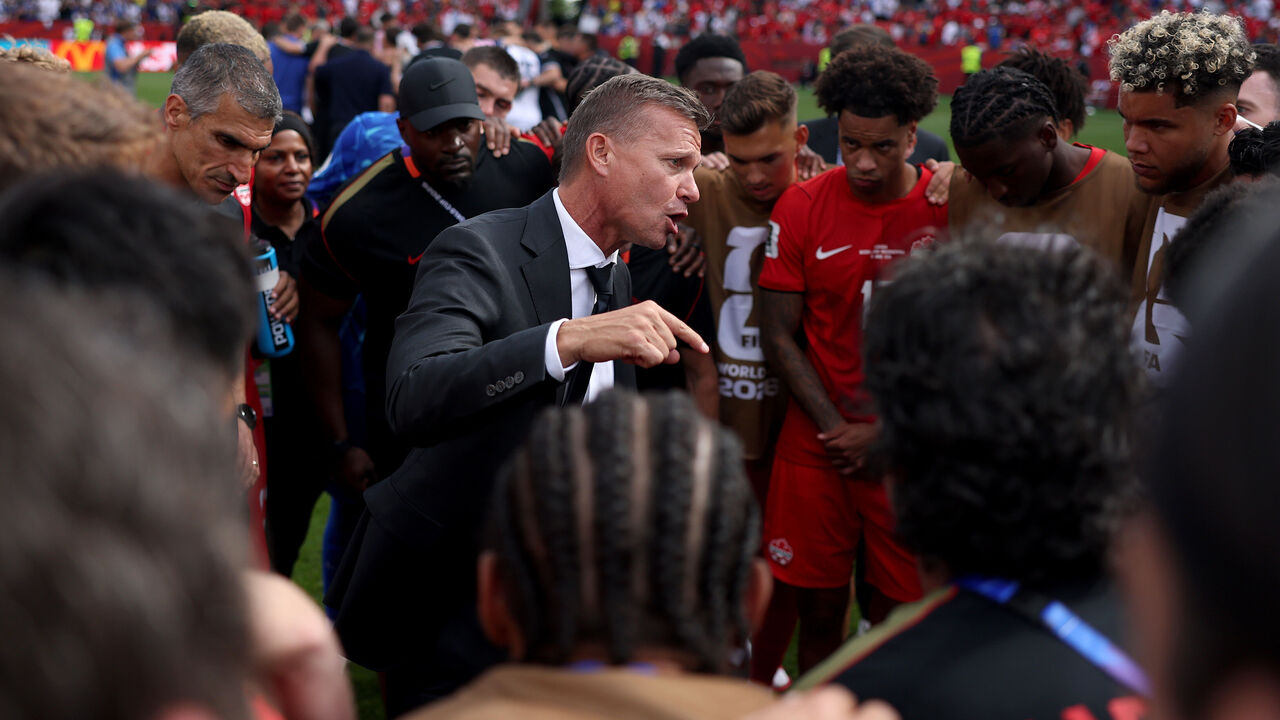
And it's worth considering that Marsch needed to solve quite the conundrum going into this World Cup. A lot of players - most notably Alphonso Davies and Moise Bombito - entered the tournament carrying injuries. In fact, many of those cleared to play were yet to prove their match fitness after only recently overcoming fitness issues or being out of favor at their respective clubs.
Additionally, Marcelo Flores, a player who addressed a shortage of technical ability in Marsch's attack, tore his ACL during Mexican side Tigres' final match before the World Cup.
But Canada fought back to draw against a team that beat Italy to reach the World Cup - and it should only get better, barring any other unfortunate injuries. Bombito and Davies could return to the fold by the time other players reach full fitness, and that should make Canada a daunting prospect for any team it potentially meets in the knockout rounds.